Cornwall makes a perfect car-free destination. Not only are the bus and train rides beautiful and the cost of getting around the county very reasonable. But you can also get out into some wild and rural parts of Cornwall on the scenic branch lines that lead off towards the coast from stations along the spectacular main line. Here are mini-guides to Penzance, at the end of the the main line railway, and to four beautiful branch lines. These are just some of the things you can see from the window as well as when you get off at a station.
Adventures in Cornwall
with Great Western Railway


1. The main line - Plymouth to Penzance
With miles of shining sea, bird-haunted estuaries and rugged rolling hills just outside the train window, the railway line to Cornwall, engineered by Isambard Kingdom Brunel in the mid-nineteenth century, is one of the UK’s great scenic journeys. Unlike the gridlocked main road, the railway hugs the pink-rocked Devon coast with its grass-topped red cliffs and intricate wave-sculpted stacks of sandstone.
- Public transport in Cornwall can be a real bargain. Book ahead for the cheapest train tickets, use railcards, try a family ticket or other ways to save. And there are also currently day tickets for unlimited bus travel across the whole county.
- The main line through Cornwall is studded with great holiday destinations. You can read more about them in our other guides, including this one about car-free holidays in Cornwall.
- Pilgrims and traders have visited Penzance, Cornwall’s most westerly big town, for centuries and now these years of history and legend make it a fascinating tourist destination. Ride the Land’s End Coaster bus through some breath-taking scenery, including top-deck views of stone circles, ruined tin mines and St Michael’s Mount. Follow Good Journey’s directions.
- Swim in the elegant Jubilee Pool, a seawater-filled lido with a geothermally-heated section and popular sea-view café. Pick up a peppery pasty from the Cornish Hen deli on Market Place and head off along the three miles of coast path to Marazion to visit St Michael’s Mount. 85 new sculptures bring to life the submerged fossil forest under the waves.
- Art lovers should also check out the Penlee gallery in Penzance, featuring Cornish lives and landscapes as painted by artists of the Newlyn School plus a great café and subtropical gardens to explore outside.

2. The St Ives Bay Line - St Erth to St Ives
For more art, sea views, coastal walking and cafés, take the mainline to St Erth and change onto the branch line to St Ives. This is Cornwall’s most spectacular short train ride – among some fierce competition!
- Sights from window include thousands of wading birds among the mudflats and reed beds of the Hayle estuary. Then the long sweep of Carbis Bay with dune-backed beaches and wooded cliffs.
- There’s a view of sand and palm trees from St Ives railway station and, across misty blue water, you can see Godrevy lighthouse on a little rocky island.
- Stroll through the pretty town and past the sandy harbour to visit Tate St Ives, facing Porthmeor beach, with changing exhibitions in its cool white halls and curving corridors. Follow Good Journey’s directions.
- Five minutes’ walk away is the Barbara Hepworth museum and garden. Cornwall’s sea-warmed air means palms and bamboos flourish among the sculptures with their towering bronze arcs and hollows.
- The railway runs parallel to the South West Coast Path so you can walk to Carbis Bay or Lelant and then hop back on the train. There are several great walks from stations in the area. Or why not try a pub crawl along the line with its many town taverns and historic country inns on this Rail Ale Trail – visit ten pubs and get a tee-shirt!

3. The Maritime Line - Truro to Falmouth
Through towns and Cornish countryside, the Maritime Line links Truro and Falmouth, both offering lots of interesting sights for visitors. There are a lot of great places to eat along the line too.
- Try a walk from stations along the line like this 3-mile ramble past Falmouth’s three beaches from Penmere. From Falmouth Docks station, walk around the nearby headland to visit Pendennis Castle. Follow Good Journey’s directions.
- If it’s a rainy day, head to Falmouth’s Maritime Museum, purpose-built from slate and green oak in the early 21st century. It’s a ten-minute stroll from Falmouth Town railway station. A hanging fleet of yachts, kayaks and dinghies float in the three-floors-high central hall. The museum café looks out across sail boats and grey water to the wooded Roseland peninsular.
- Ferries cross the wide Fal River all year, taking foot passengers from Falmouth over to St Mawes. Or you can take a bus to the National Trust’s Glendurgan garden with its winding laurel-hedged maze.
4. The Atlantic Coast Line - Par to Newquay
Between sandy seaside Par and Newquay, 45 minutes’ train ride away on the North coast, you can catch the Atlantic Coast Line. From each end, there are great stretches of the South West Coast Path to walk. Between the two coasts, the railway crosses cotton-grassed Goss Moor and passes the UNESCO-listed Luxulyan Valley.
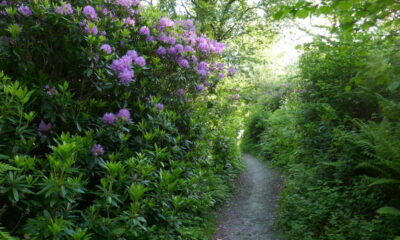
- Sample the lovely seven-mile walk over the undulating headlands from Par to Fowey with its clifftop castle, through Daphne du Maurier country. Look out for hidden coves and beaches, clumps of pink thrift flowers on the clifftops, banks of wild garlic and wooded paths through purple rhododendrons. Bus 25 runs regularly back again to Par.
- One of four seasonal request stops on the Atlantic Coast line, Luxulyan is the nearest station to the Luxulyan Valley. Ask the guard to stop there and wander past the village church, through mossy oaks and fern-fringed waterways to the monumental Treffry viaduct, an energetic mile from the station. Towering thirty metres over the wooded path, this huge granite bridge is the centrepiece of an extraordinary post-industrial valley turned fairytale glen, where foxgloves sprout beside old tramlines and forgotten cascades.
- The well-signed Saints Way trail leads through the valley, which was once a huge copper mine, all water wheels and steam engines. Now the only sounds are birdsong, rustling beech trees and the River Par, cascading past banks of bluebells. You can even walk from here to the Eden Project. Or get bus 28 from St Austell station, five minutes from Par along the main line. See Good Journey’s directions.
- At the far end of the line, Newquay has eleven different beaches, a zoo, lots of pubs and cafes, and some great coastal walking with handy buses along the spectacular north coast all the way to Padstow.
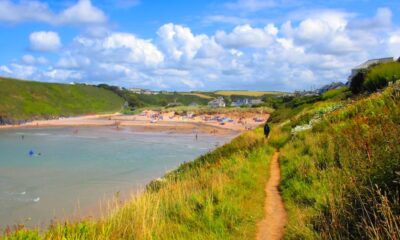
- Spend the afternoon on one of Newquay’s varied beaches. Learn to surf on stormy Fistral or explore the caves and rockpools around Whipsiderry. For a taste of the spectacular Coast Path, hike 1km from Fistral, past craggy Lewinnick Cove to the steep-sided River Gannel for crab sarnies and homemade cakes at the Fern Pit café above the tidal ferry. Or just relax on the sheltered sand of the tiny, surf-free Harbour Beach and eat fish and chips as the sun sets.
5. The Looe Valley - Liskeard to Looe
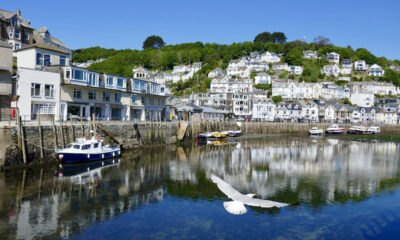
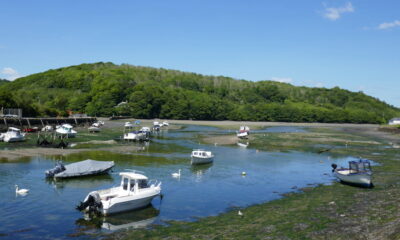
At high tide, there’s a wide blue estuary outside the train window in the wooded Looe Valley. At low tide, herons and egrets pick their way across the mudflats and cormorants hold their wings out to dry. This is another beautiful trip where there’s always something to see.
- Break your journey at Liskeard and catch the branch line to Looe for brunch at the riverside and a swim from the sandy beach. Crabbing is so popular along the harbour that the town recently launched a scheme to recycle crab lines.
- In school holidays, the beach and car parks fill up fast so it’s far more relaxing to take the Liskeard to Looe branch line.
- You can also ask the guard if you want to get off the train at Causeland in the middle of the woods and walk ten minutes up a quiet lane to visit the Looe Valley Vineyard with 6000 vines in south-facing fields. You can book for a hands-on experience of the whole winemaking process from pruning to corking plus a tutored tasting.
- Leaving the vineyard, you could walk on to the next station, twenty-minutes up another deep-sunken lane with walls of crumbling slate held together by dripping moss and tree roots. On the way, there’s a little granite wellhouse dedicated to St Keyne, a fifth-century holy woman.
- At St Keyne Wishing Well Halt, look out for summer swallows flying in and out of the station pillars as you wait for the train.
- The Looe Valley Line also has a Real Ale Trail with two fabulous pubs to visit in Liskeard, five in Looe and the whitewashed Plough about half an hour’s walk from Causeland station near the Duloe stone circle. Visit all eight and get a tee-shirt!
- Wherever you go in Cornwall, travelling by train will make it much more fun.