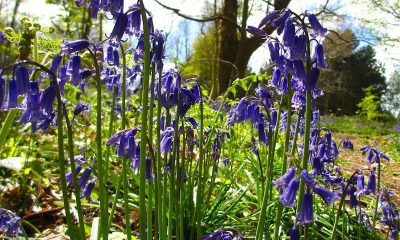
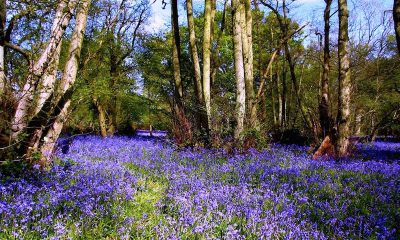
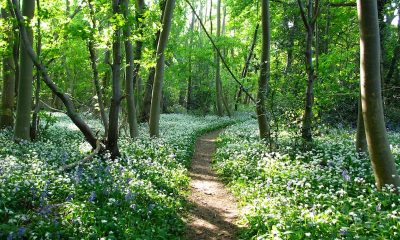
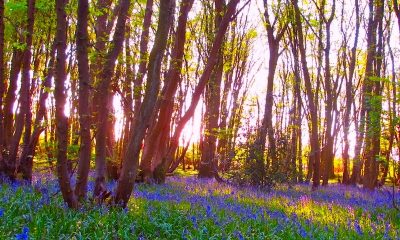
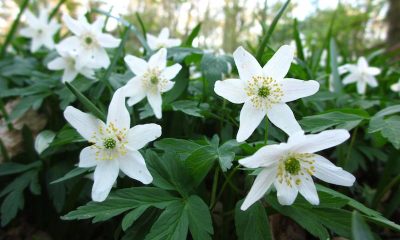
One of the great pleasures of spring is wandering among lakes of bluebells and other spring flowers. They suddenly spill out in April and May through woods across the UK. There are probably bluebells nearby wherever you live. However, here are six places you don’t need to drive to, that are great for a springtime outing.
Bluebells by bus and train
around the UK

1. The Bluebell Railway, Sussex
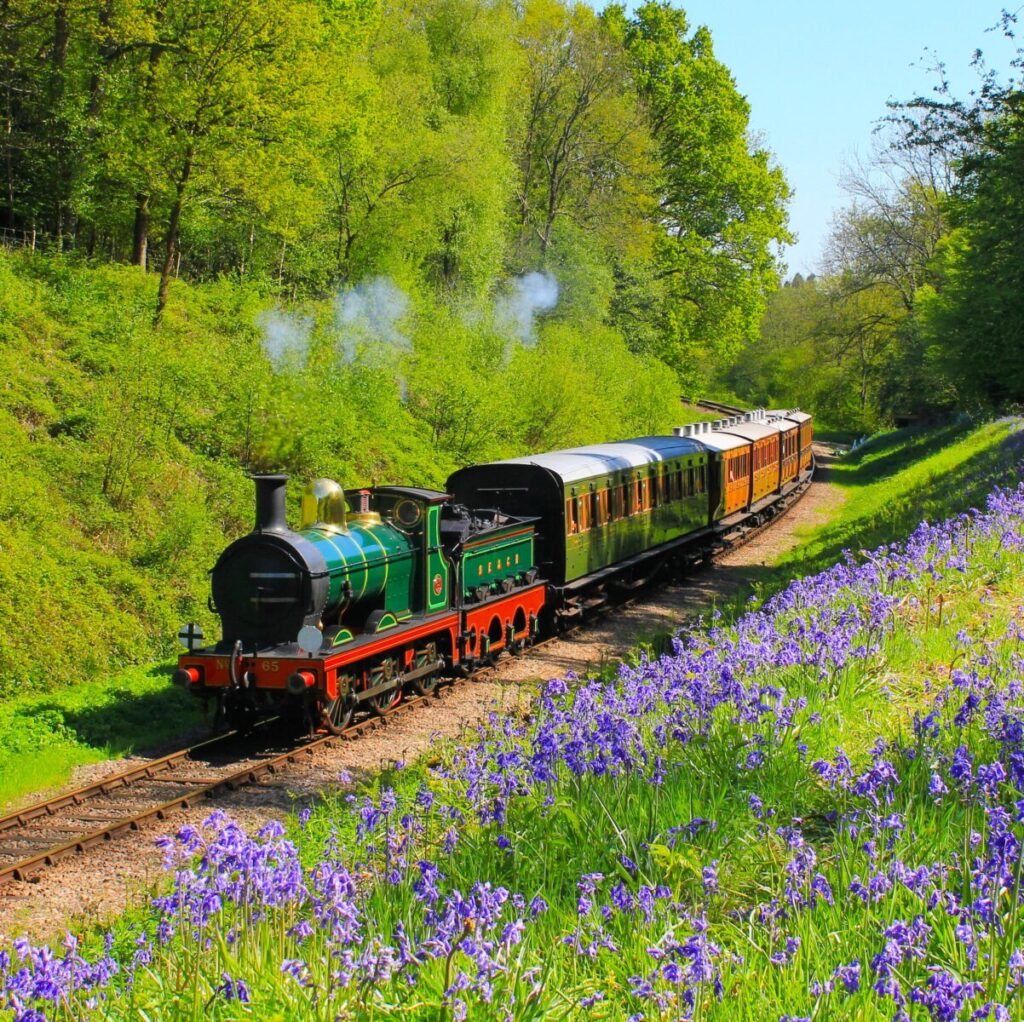
Ride the rails in April and May, when the bluebell woods by the track are in bloom (with thanks to Peter Edwards and the Bluebell Railway for the photo). There are also views across the Weald, swathes of ancient woodland and fields of sheep, pigs and Shetland ponies. The Bluebell Railway opened as a heritage railway in 1960. It was the first standard gauge preserved steam railway in the world to run a public passenger service. The railway also boasts the longest tunnel and longest viaduct of any UK heritage railway. And you’ll find more steam locos here than anywhere outside the National Rail Museum in York.
- But this steam railway is not just a destination for train enthusiasts. Go along for a ride through rural Sussex with banks of seasonal flowers. Enjoy a cream tea on the dining train, a pint in the Bessemer Arms, or a stroll to neighbouring Sheffield Park. In fact, the Bluebell Railway has come up with a whole series of local walks from stations along the line. All of them feature bluebells in season.
- How to get to the Bluebell Railway car-free: arriving from London, visitors can take the train to East Grinstead (an attractive hour-long journey) and then it’s a very short walk.
- Arriving by train means you can take advantage of the 2 for 1 offer on tickets – download the voucher before you go.
- Alternatively, there are buses from lots of different places and you get £2.50 off. Follow Good Journey’s directions.
2. Take the train to Billericay in Essex
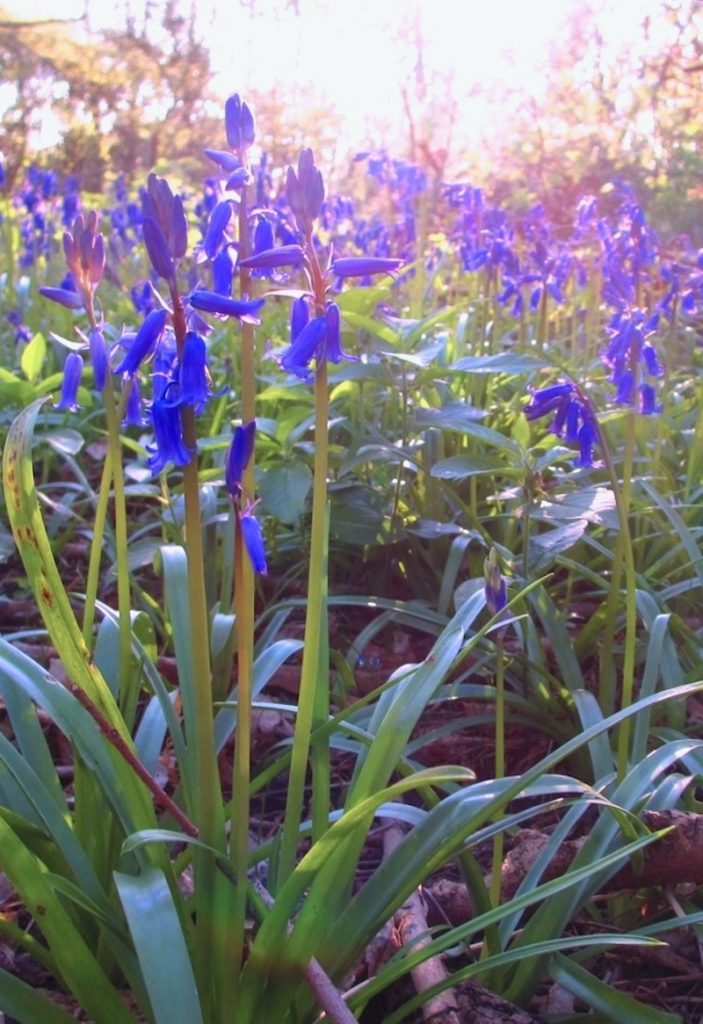
Norsey Wood has a fascinating history, as well as the spring flowers and butterflies. It’s less than ten minutes walk from Billericay Railway Station (see map below).
- Turn right out of the station and left just before The Railway pub. Head left again up Norsey Road and turn right, immediately after Norsey Close, onto a path beside a meadow. You will soon see banks of bluebells on your left.
- Enter the trees where the fence ends, but keep along the edge of the wood. After a little footbridge, red-topped posts with white arrows guide you round a woodland trail. This passes a Bronze Age burial mound and a picnic area.
- Cross the wood’s central ride, which dates back to the Iron Age. Go on along the way-marked walk, past ponds, ancient coppiced hornbeams and trenches dug for practice during World War I. The wood also has Roman remains. Wat Tyler’s rebels hid here in 1381 during the Peasants’ Revolt.
- If you feel like a longer walk, you could hike four miles on country roads and tracks to Hanningfield Reservoir. A sea of spring bluebells turns the woods here as blue as the water.
- From the far end of Norsey Wood, turn left along the Heath. Go right onto Goatsmoor Lane and right again onto a bridleway, just beyond Forty Acre Plantation. Simply keep going in this direction to emerge at last onto Downham Road. Turn right towards the reservoir.
- From the welcoming visitors’ centre to the lakeside café it’s a very leisurely hour’s stroll. Buses 13 or 13a run a few times per day to Chelmsford from outside the nearby Old Windmill pub.

3. Beane Valley, Hertfordshire
Banks of white-star-flowered wild garlic are a seasonal feature of the lovely Beane Valley, just north of Hertford. A five-mile linear walk to the next station, Watton-at-Stone, is a top springtime walk – and there’s definitely no need to drive there!
- Start from Hertford North railway station. This is served by regular trains from London’s Moorgate, calling at Finsbury Park and Highbury and Islington stations.
- Cross the road outside the station and walk a few steps left to the mini roundabout. Go right along Beane Road, crossing the river and passing water meadows. Turn left into Molewood Road. Follow it to the end and continue along the wooded path ahead. Keep left beside the river, following the Hertfordshire Way signs along the Beane valley for up to four miles.
- Keep going, near the river, until you reach the landscaped grounds of Heath Mount school. Where three arrows point right, turn left (don’t worry – another way-mark soon shows you’re on a public path).
- Cross the old bridge, follow the path under the A119 and right into Watton-at-Stone. (Did you know: Rupert Grint, who played Ron Weasley in the Harry Potter films, grew up in Watton-at-Stone and went to school in Hertford?)
- Reaching the pretty High Street, you’ll pass the Bull and George and Dragon pubs.
- Turn left at the water pump to reach the station where trains head back to Hertford (and London) every hour.
- For more adventures in the area, check out our car-free guide to Hertford and Ware.

4. Blickling Estate, Norfolk
Arrive in style by steam railway, get the X44 bus from Norwich, or even walk the Weaver’s Way to arrive at the National Trust’s Blickling Estate. Follow the winding paths through Blickling’s Great Wood. There are carpets of bluebells under the trees, made even bluer by clever woodland management to let in just the right amount of light.
- The X44 bus leaves Norwich bus station regularly (not Sundays), heading for Sheringham. Hop off in Aylsham and walk along Blickling Road to reach the estate. Walk through the town, past the church and via Abel Heath – a lovely half hour’s walk in its own right.
- The rural Bure Valley Line is a narrow-gauge steam railway from Hoveton and Wroxham stations. It offers an eighteen-mile round trip through the Norfolk Countryside. It stops in Aylsham, 1¾ miles from Blickling.
- Keen walkers could also follow the Weavers Way to Blickling along a dismantled railway line from North Walsham, eight miles away.
- Follow Good Journey’s directions. Car-free visitors get 20% off entry and 10% off in the cafe.
5. Stoneycliffe Wood Nature Reserve, Yorkshire
Stoneycliffe Wood, just outside Wakefield, has some lovely springtime displays. You can follow winding paths through the green oak and birch trees.
- Get the train to Wakefield Westgate. Step out of the station onto Westgate and find bus stop W8. Hop on bus 231 towards Huddersfield, which crosses the River Calder. Get off at Coxley View and the entrance to the woods is nearby.
- RHS Garden Harlow Carr is also not too far away, accessible from Harrogate railway station. A woodland area complements the beautiful stream-side and kitchen gardens, glasshouses and wildflower meadows. Spring arrives in the woods with a rainbow of rhododendrons and camellias. You could have lunch or tea at the famous Bettys tearoom. In fine weather, there’s a tea house right in the middle of the gardens.
- Follow Good Journey’s directions to RHS Garden Harlow Carr.
6. Prisk Wood, Gwent
This is a Site of Special Scientific Interest on the banks of the River Wye. Prisk Wood has stunning spring bluebells, together with wild garlic, wood anemones, early-purple orchids and yellow archangels. Mosses, ferns and saxifrage fringe the stream-side banks. It’s one of several Wye Valley bluebell woods, some of which are visible from the bus.
- From Stand 1 in Chepstow bus station, catch hourly bus 69 towards Monmouth.
- This bus takes you past Chepstow racecourse and beautiful Tintern Abbey. It goes along the Wye Valley to the pretty village of Redbrook, on the Welsh-English border. Cross the river and turn left onto Lone Lane to find the wood. Follow Good Journey’s directions to Tintern Abbey.
- The Boat Inn is just over the bridge and serves beer, cider and perry from local brewers.
- Offa’s Dyke Path leaves from the bus stop, heading up into the hills above the river.
- There are also bluebells and wild garlic in Cadora Woods nearby. This whole valley is one of the UK’s most important areas of ancient semi-natural woodland.
- On the way back, you could also visit Chepstow Castle, five minutes’ stroll from the bus station.
More flower walks
You might also enjoy:
- where to see daffodils by bus and train around the UK
- seeing snowdrops without a car
- visiting an RHS garden.