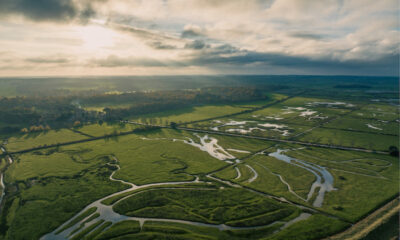
Norfolk is famous for its wildlife. And never more so than in late autumn and winter. Baby seals, migrating geese, winter waders, rutting deer and many more birds and animals can be seen in the Broads, along the coast and in the heaths and woods. This variety of habitats is what makes Norfolk such a great place for nature lovers. Lots of people imagine you can only get to these wild places with a car, but there are plenty of reserves you can access easily by bus and train. Here are seven of the best.
Wildlife without a car
in Norfolk


1. Titchwell Marsh
Woods and reeds, salt marsh and sand dunes, freshwater and tidal lagoons: with such a range of habitats, it’s no surprise that RSPB Titchwell Marsh is one of the best places to see a variety of wildlife. Highlights include bearded tits and shy bitterns, hiding in the reed beds, and wintering avocets in the lagoons. Thousands of migrating birds pass through Titchwell in spring and autumn, and many spend the winter here, giving visitors a great opportunity to see different species of ducks, waders, seabirds and geese. Various nature trails lead through the woods and heath and down to the sea past the lagoons so you can easily access all the different habitats.
- How do I get to RSPB Titchwell car-free? Coastliner Bus 36 from King’s Lynn to Fakenham stops on the road right outside the RSPB reserve. Just follow the signs!
- If you’re arriving in King’s Lynn by train, come out of the railway station and walk straight ahead along Waterloo Street to reach the bus station, where bus 36 leaves hourly. The journey is a scenic hour and fifteen minutes through the woods around Sheringham, past a lighthouse in Hunstanton, and along the coast with views across the marshes to the sea.
- And what about lunch? There’s a café at RSPB Titchwell. Four stops back towards King’s Lynn on the bus, you’ll find a choice of places to eat and drink in Thornham. And one stop (or a short field-edge walk) beyond that, Drove Orchard’s farm shop and Eric’s Fish and Chips also have a bus stop right outside.

2. Dersingham Bog
Dersingham Bog is a National Nature Reserve near King’s Lynn, full of birches, pinewoods, heather and rare wildlife. There are several signed waymarked trails from the entrance, exploring the woods and heath, and the glades attract birds such as redpoll, siskins and crossbills.
- Look out for roe and fallow deer running across the open areas and into the trees. The area attracts migrating birds in autumn and is also a great place for fungi-spotting with colourful fly agaric, boletus, ink caps and stinkhorns.
- How do I get to Dersingham Bog by bus? Bus 36 from King’s Lynn to Fakenham and bus 34 to Hunstanton both stop at Edinburgh Plantation, ten minutes’ stroll from the entrance to Dersingham Bog. Coming from King’s Lynn, get off the bus, walk a few steps further and turn left into a lane through the woods. Keep right at the fork and you will soon find the little car park for Dersingham Bog.
- And what about lunch? There are no refreshments nearby, but you’ll find a big choice of places to eat and drink in King’s Lynn or Hunstanton.

3. Berney Arms and Breydon Water
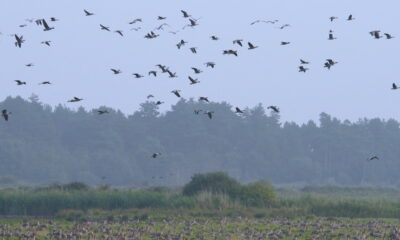
Breydon Water near Great Yarmouth attracts huge numbers of over-wintering birds and tens of thousands of wintering wildfowl flock to the area known as Berney Arms every year. This is a very remote wild area, which you can only access by foot, rail or boat, but if you plan ahead, you can take one of the rare trains from Norwich or Great Yarmouth to Berney Arms. It’s a request stop so make sure you tell the guard you want to get off! If the train times don’t suit you, you can also walk out and back from Great Yarmouth.
- From Berney Arms station, cross the railway line and head for the big windmill near the river. Turning left, Great Yarmouth is about 6 miles along the signed Wherryman’s Way and Weavers Way. From this reed-fringed embankment, there are views across the River Yare and isolated windmills with lots of birds feeding on the low tide mudflats along Breydon Water.
- Alternatively, turn right towards Reedham, following the riverside Wherryman’s Way for about five Miles. Here, there is a choice of pubs and cafes and more frequent trains. Look out on either walk for flocks of wigeon, lapwing and plovers and for racing hares and muntjac in the wide marshy fields.
- And what about lunch? Bring a drink and snack as there are no refreshments until you get to the end of the walk, whichever way you set off.

4. Holkham deer park and nature reserve
Visiting the park and beach at Holkham offers several unbeatable winter wildlife experiences. The wooded grounds around Holkham Hall are a great place to see and (hear!) deer in autumn while the marshes, dunes and coastal pinewoods near the sea are full of interesting birds.
- There is a lakeside nature trail near the hall, offering a circular walk with views across the water and information about things you might spot. It’s one of seven different waymarked trails around the park. There are cafes too when you get peckish.
- Autumn is rutting season for the deer in the park nearby and provides some drama (from a safe distance!) in the colder months. The male deer (“bucks”) can get into fights and the furry velvet coating is shed from their antlers.
- Heading down Lady Anne’s Drive to the beach and nature reserve, there are winter birds to spot, including brent geese, colourful shelduck, redshank, gulls and lots more.
- How do I get to Holkham without a car? Follow Good Journey’s directions.
5. Cley Marshes
Heading eastwards along the North Norfolk coast towards Sheringham and Cromer, there are more nature reserves with impressive selections of wintering birds. Cley Marshes is Norfolk Wildlife Trust’s oldest and most famous nature reserve with bird hides and a visitor centre. Together with neighbouring Salthouse marshes, this is an area with a lot to see.
- How do I get to Cley Marshes by bus? Bus CH1 Coasthopper from Cromer or Sheringham towards Wells-next-the-Sea stops by the reserve. Get off at the stop called Cley Norfolk Wildlife Trust. A path next to the bus stop leads straight into the marshes. The Coasthopper bus is currently just £2 no matter how far you travel and if you show your bus ticket in the visitor centre, which is free, you can claim a discounted entrance fee to the hides. There’s a cafe too!
- Five stops further on the Coasthopper bus from Cley Marshes brings you to Morston Quay, where companies like Beans Boat Trips run all year round to see the seal colony on Blakeney point.
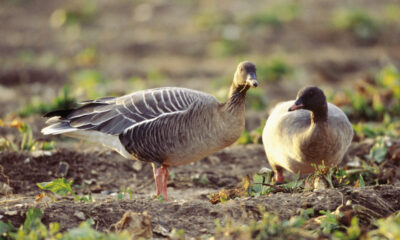
- The Coasthopper bus also stops in Salthouse and there are footpaths from there to explore these bird-rich beaches too. In winter, you can see lots of different kinds of ducks along the beach with flocks of linnets along the shingle bank. When it’s cold weather, look out for rare snow buntings too, feeding on thistle seeds. This is also one of several good places to see big, noisy lines of pink-footed geese flying overhead arriving from Iceland for the winter.
6. Pensthorpe
For a different kind of wildlife experience, Pensthorpe mixes nature spotting with gardens, play areas, aviaries and more. There’s a sculpture trail on a natural theme and two bird hides for spotting waders, wintering waterfowl, birds of prey and more.
- Pensthorpe’s Wader Scrape attracts wintering ducks like wigeon and teal and there are more birds in the woods and reed beds.
- How do I get to Pensthorpe without a car? Bus X29 Yellow Line from Norwich stops at the gates and costs just £2 until December 2024. Follow Good Journey’s directions.
- There’s a cafe at Pensthorpe and plenty to see. There are also plenty more places to eat in Fakenham and in Norwich, at either end of the X29 bus route. Keep a look out on the way and you might see more wildlife from the bus windows!
7. Winterton Dunes
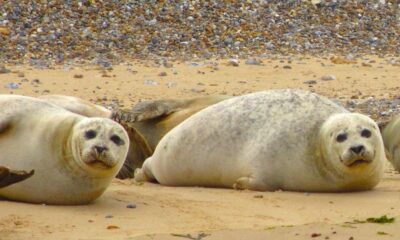
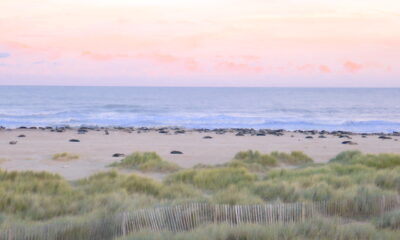
One of Britain’s greatest wildlife spectacles is the sight of thousands of seals and their new babies near Winterton-on-Sea. Every winter, from November onwards, thousands of grey seals give birth on the beaches and in the dunes. It’s such a popular event that there is often a queue of cars heading for the beach car park. You can help avoid this pollution by getting the bus. And make sure you stay away from the actual beach and watch the seals from a safe distance behind the fence in the dunes.
- How do I get to Winterton by bus? Winterton-on-Sea is a 45-minute ride on Coastal Clipper bus 1 from Great Yarmouth, which has smart hourly trains through the marshy Broads from Norwich. You will need to walk from Yarmouth railway station to the bus station
- The Friends of Horsey Seals have looked after the growing colony since 2012 to make sure visitors can watch safely without disturbing the wildlife. The seal wardens are devoted and knowledgeable and keen to stress that people should keep off the beach at this time of year. A seal with a raised flipper, which looks like a cheerful wave, actually means stay away.
- And what about lunch? There’s a café on the beach, fish and chips in the village.
- You could take a circular walk through the area with lots of interesting sights. There are rare ferns, fungi and mosses in the dunes. Winter birds include geese, gulls, turnstones and sanderlings. And there’s a tall white lighthouse above the dunes and colourful thatched roundhouses that are part of Hermanus holiday park.
- Wherever you go across Norfolk in search of wildlife, there are some amazing things to see. Travel by train, bus, bike and foot to help keep these beautiful places thriving for years to come.
Thanks to the following for photos in this feature: RSPB and Ben Andrew for the avocet and plover, Andrew Bloomfield and Andy Hay for the pink-footed geese, Holkham for the deer and Lloyd Birch for the aerial shot.
Discover more car-free adventures and discounts at attractions around Norfolk – the UK’s first Good Journey County.