On summer days, many of us want to head for the coast and an overheated car is the least appealing way to get there. Here are ten beaches you don’t need to drive to. And – once you get there – more options for exploring by bus, boat or on foot.
Beaches
by train

1. Newquay and Par
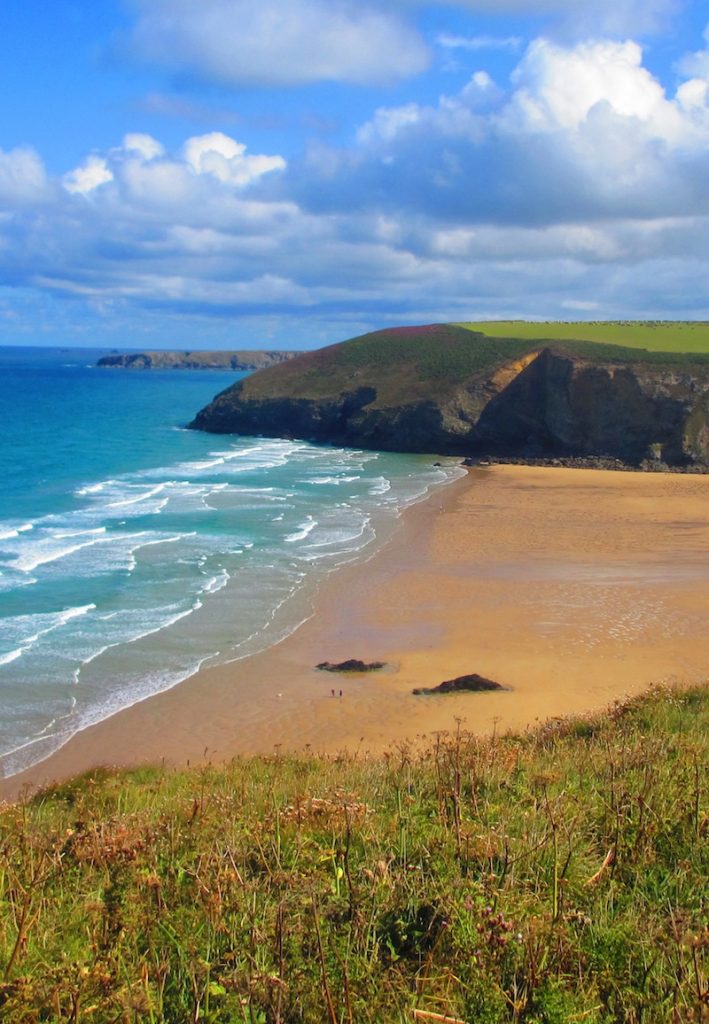
With a dozen sandy beaches at the far end, the Atlantic Coast Line (one of Cornwall’s scenic community railways), is a little branch line that runs from Par to Newquay, three quarters of an hour away across cotton-grassed Goss Moor.
- Par station is on the main GWR line from Paddington and the soft, white expanses of Par Sands beach are a 20-minute walk from the station.
- From the Newquay end of the branch line, the seaside is just two minutes from the train and there are twelve sandy beaches to chose from.
- Closest to Newquay station is the Great Western Beach, with its coves and nearby cafés: simply turn right on Cliff Road to the Great Western Hotel and turn left down the tarmac path just before it. At low tide you can walk along the sand to neighbouring Tolcarne beach and explore the rock pools left behind by the retreating sea.
- Newquay’s beaches offer something for everyone: surfers can head along the South West Coast Path to famous Fistral Beach, where you can hire boards and wetsuits.
- For a spectacular sample of the coast path’s delights, hike the mile from Fistral, past craggy Lewinnick Cove to the steep-sided River Gannel for crab sarnies and homemade cakes at the Fern Pit café above the tidal ferry. Or just relax on the sand somewhere and eat al fresco fish and chips as the sun sets.
2. Weymouth
Weymouth’s main beach itself is likely to get busy like other parts of the Dorset coast. But the sands are a couple of miles long so if you turn left and keep walking, you’re bound to find somewhere a bit emptier. There are royal connections in this iconic Dorset town: when George III went famously mad, his doctor sent him to Weymouth as “the Resort of many people of the first Distinction”. South Western Railway run regular trains to Weymouth.
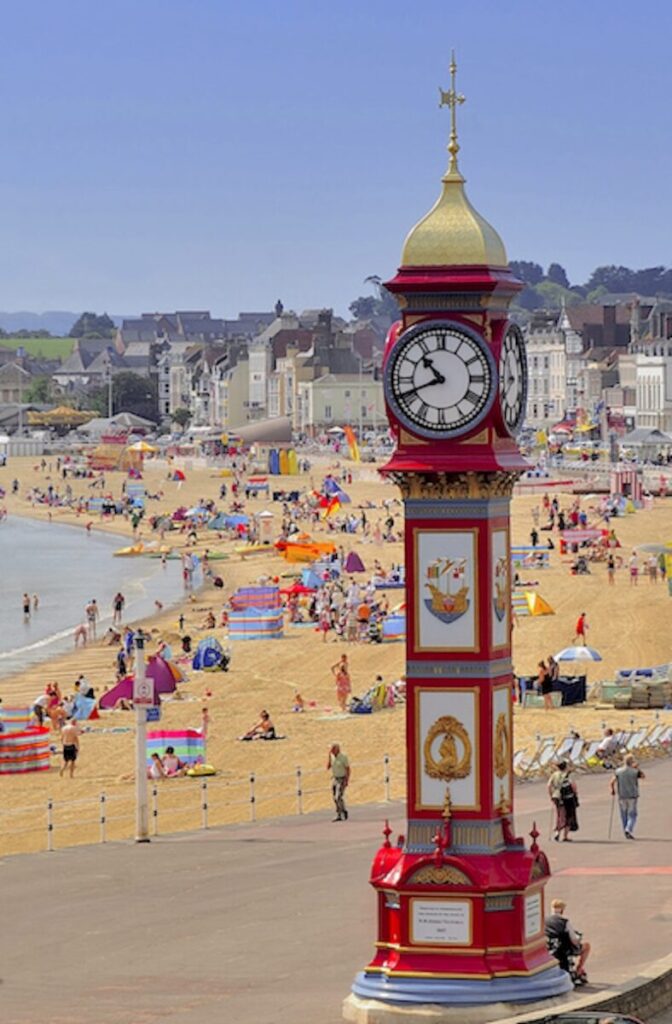
- Walk out of the station onto Queen Street, past the Railway Tavern, and along King Street with the clock tower ahead of you on the Esplanade. This bright red landmark commemorates Queen Victoria’s jubilee in 1887.
- There’s a statue of Queen Victoria to the left, Rossi’s Ice Cream parlour (opened the year Victoria became queen) just a few paces to the right and – ahead of you – Weymouth’s famously long and sandy beach. It’s generally quieter heading left.
- Continue right towards the ferries and attractions at the south end of the beach and you’ll soon pass a statue of George III, who made Weymouth fashionable with his love of swimming in the sea. There’s a replica of his bathing machine nearby, a sort of beach hut on wheels.
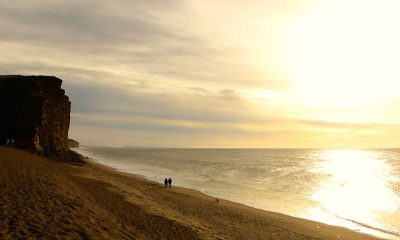
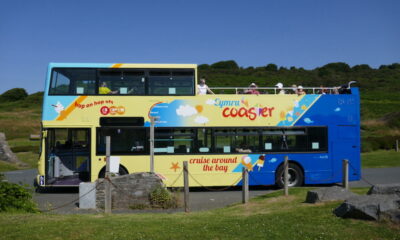
- From the King’s Statue, you can hop on buses X53 or, in the summer the new open-topped X52, and enjoy one of Britain’s top scenic bus rides along the picturesque Jurassic Coast. These buses can take you to other Dorset beaches like shingly Burton Bradstock and sandy West Bay – the real life Broadchurch.
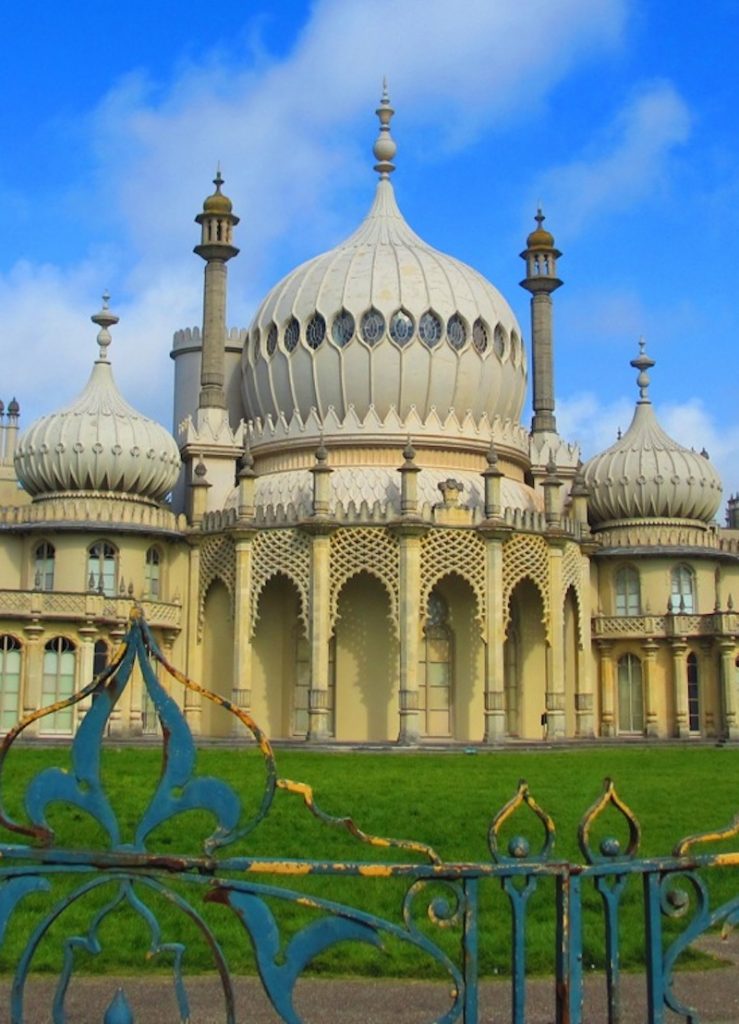
3. Brighton and beyond
There’s more Georgian seaside splendour in sunny Sussex. It was George IV who made Brighton fashionable, building the ornate Royal Pavilion as his Regency beach hut. The beaches and walks mentioned here are quite popular, but have plenty of space – just be prepared for a pebbly trek to find a quieter corner.
- Southern trains from Victoria Station in London take an hour to get to Brighton and the beach is a fifteen-minute downhill stroll.
- Walk straight out of the railway station along Queens Road and you’ll soon see the water shimmering ahead of you and, at sunset in spring and autumn, huge murmurations of starlings circling mesmerisingly over the old pier.
- A scenic coastal bus ride away on bus 12X is elegant Eastbourne. On the way, soon after Seaford, the bus stops at Exceat. From here you can follow a meandering estuary down to the sea or walk over the lighthouse-topped Seven Sisters – one of England’s most popular cliff-top walks. At the far end, there are direct trains back from Eastbourne.

4. Sunshine Coast Line
Clacton, Frinton, Walton-on-the-Naze… just the names of these maritime towns and villages conjure up forgotten seaside pleasures: sand castles and shellfish stalls, beach huts and bowling greens.
- The railway from Colchester to Clacton, branded the Sunshine Coast Line, gets support from a keen community rail group.
- Clacton Pier, with its arcades and fairground rides, is exciting enough to brighten even the rainiest holiday.
- The other branch of the Sunshine Coast Line heads for Frinton and Walton-on-the-Naze, where you can stroll along the sands or climb the 18th century viewing tower.
5. Cromer
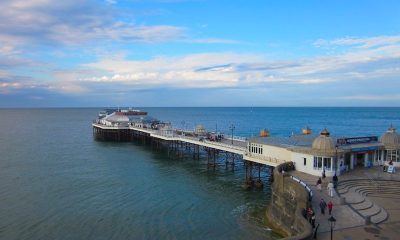
The railway line leading to Cromer also has an appealing identity: the Bittern line, running from Norwich to Cromer and Sheringham, through some lovely countryside. Cromer has sandy beaches, a traditional pier and plenty of seaside entertainment.
- Norfolk County Council has produced a booklet of walks to help you enjoy the countryside around Bittern Line by train, including a 7-mile route from Roughton Road to Cromer if you’re feeling energetic. This leads you through Overstrand with a choice of routes: along the beach at low tide or over the cliffs when the tide is high.
- It’s not far from Cromer station directly to the beach and pier. Right along the seafront, you soon pass a memorial to Henry Blogg (“the greatest lifeboatman of all time”). Cromer’s first lifeboat station opened in 1804 and the Lifeboat Museum is named after Blogg.
- This is a curiously haunted stretch of coast: listen out for the sound of bells from a village lost to coastal erosion in the 15th century and look out for Black Shuck, a fearsome ghost-dog who haunts the beach in stormy weather.
- Bus CH1 runs from Cromer to Wells-next-the-Sea, an hour away, where you could catch bus 36 onwards towards King’s Lynn, for an epic bus journey all along the North Norfolk coast.
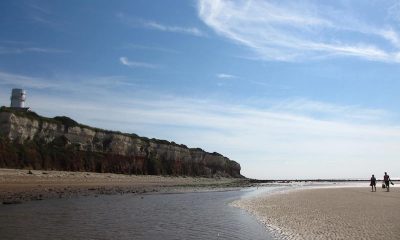
- Hop off at Hunstanton, another hour’s bus ride beyond Wells, to enjoy striped cliffs, rock pools, wading birds and old fashioned cafes.
6. Scarborough and Whitby
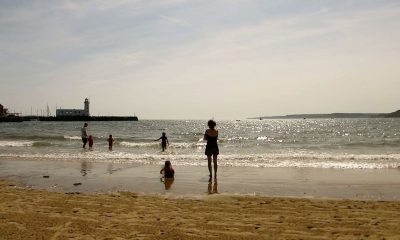
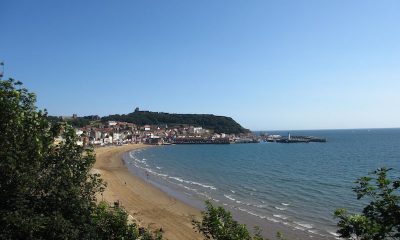
The sandy beaches along the east coast of Yorkshire are the stuff of nostalgia: ice creams and donkey rides, boat trips and beach huts. Castle-topped Scarborough is a lovely place for a sunny stroll. Wrought-iron bridges link gardens, full of winding wooded pathways, and promenades overlooking the sparkling sea.
- In Summer, you can ride down to Scarborough beach on a tram from the top of the cliffs. It’s less than ten minutes from the station and the views on the way are great.
- There are fresh-off-the-boat crab sarnies available from kiosks near the beach and you can climb up to the castle for views of town, sea and countryside.
- A scenic ride away in Whitby, via bus X93, there’s the ruined abbey that inspired Bram Stoker’s Dracula, boat trips around the harbour and famously tasty fish and chips. Work up an appetite with a climb to the headland or a swim from the mile-long sands. Book timed tickets in advance for the abbey. Follow Good Journey’s directions.
7. Portobello, Edinburgh
The Borders Railway from Tweedbank is a bonus for commuters living in the bohemian “Porty beach” area of Edinburgh. And it’s good for visitors to the city too, looking to escape the festival crowds in August for instance, in favour of a day at the beach.
- Hop on the train from Waverley station and get off at Bruntstane eight minutes later.
- Leave Brunstane station (pronounced “Broonstun”) and walk for fifteen minutes. You’ll find the beach ahead of you.
- Turn left along the seafront to find lots of great bars and cafes.
- Several buses also run from nearby Portobello High Street into central Edinburgh.
8. Blackpool
Sticks of rock and kiss-me-quick hats, winter lights and summer fun, Blackpool – home of Blackpool Pleasure Beach – is the ultimate seaside destination if you’re looking for the too-often-forgotten flavour of childhood holidays.
- Get the train from Manchester, Birmingham, Liverpool, Glasgow or London Euston, changing at Preston, step off at Blackpool Pleasure Beach station, and you’re there! Walk straight ahead toward the sea, turn right to reach the Big One roller coaster, or carry on along the coast to reach the Sandcastle Water Park.
- For refreshments, try fish and chips from Yorkshire Fisheries or fresh vanilla ice cream from Notarianni’s parlour.
9. Barmouth and Aberdyfi
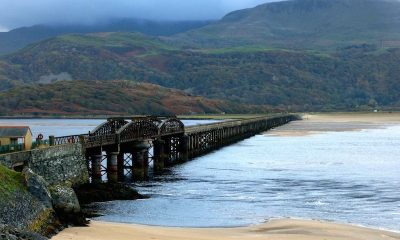
The west coast of Wales has some brilliant beaches and a huge amount of space. The Cambrian Line, one of the UK’s top scenic routes, divides at Dyfi Junction with one line heading for Aberystwyth and the other running up the coast all the way to Pwllheli on the Llyn Peninsula. The seaside town of Barmouth, with its Victorian cottages and steep, winding alleys, its classic seafront and spectacular viaduct, makes a great base.
- Nearby, there’s also the Mawddach estuary to explore and – further up the coast – there are castles, wildlife reserves, and fabulous visitor attractions like Portmeirion and the Ffestiniog Railway.
- To the south, the pretty fishing village of Aberdyfi has three miles of sandy beach stretching north to Tywyn, home of the Talyllyn Railway, the world’s first preserved railway.
10. Swansea Bay
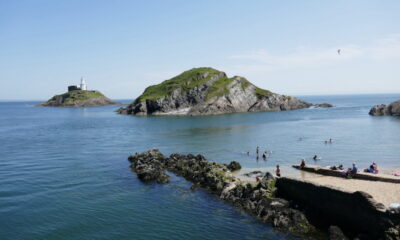
Swansea’s underrated charms include five miles of gentle sandy beach. Get a PlusBus ticket when you arrive by train and you can ride along the coast to some of the less busy stretches. You can even reach the beautiful Gower peninsula and walk the flowery coast path near the characterful village of Mumbles.
- How to get to Swansea beach: The sandy bay at Swansea is about twenty minutes’ walk from the railway station, just beyond the museums, but for quieter and slightly less urban stretches of Swansea’s fantastically long beach, hop on bus 4 and lots of others to ride along the seafront.
- Don’t miss the Secret Beach Bar and Kitchen, right on the sands near Swansea’s botanical gardens. Nearby is the suburb of Uplands where the poet Dylan Thomas grew up.
- How to get to the Mumbles: from Swansea bus station, bus 2 runs all the way along the coast, with great views, to the Mumbles. When you get to the Mumbles, there is paddleboarding and a Victorian pier, views of the lighthouse, stretches of coast path to walk and fresh seafood. Enjoy the beach!