Our Hertford and Ware car-free adventures start with two scenic market towns beside the pretty River Lea. You can stroll between them along the water and go on to visit Amwell Quarry Nature Reserve, with its reed-fringed, flooded gravel pits. You can take a bus through the Hertfordshire villages and walk to the sculpture-filled grounds of the Henry Moore Foundation at Perry Green. With so much to visit, it’s a surprisingly good area for a staycation holiday, too – scroll to the end for more tips if you’re staying longer.
Hertford and Ware
Hertfordshire


1. Stroll along the river
The riverside is never far away in Hertford and Ware. Hertford North Station, with trains from Moorgate and Letchworth, is closest to the lovely little River Beane. Hertford East station, with trains from London Liverpool Street via Ware, is closer to the wider River Lea. A beautiful 2½-mile walk through water meadows along the river to Ware, passes the start of the New River walk and a series of waterside gazebos. You can read more about the New River walk in our car-free guide to Enfield.
- Leave Hertford East railway station, turn right along Mill Road and right again along the river. After a mile, you will reach a brick house on your right; this is the Victorian Gauge House that regulated an extra flow of water from the Lea into the New River, an aqueduct that has carried drinking water from Hertfordshire springs to London since the early 17th-century.
- Go on along the River Lea, under the A10, into Ware. Reaching the centre of town, you pass a line of 18th-century gazebos – a unique group of riverside summerhouses in the gardens of former coaching inns. At the bridge, just beyond the gazebos, turn right into Amwell End and left into Station Road to reach Ware railway station. Zoom in on the map above to see the route.

2. Amwell Nature Reserve
From Ware railway station, turn left onto Station Road, right past the shops and right again along the river for another beautiful waterside walk. A sign points left after about 1½ miles to Amwell Nature Reserve, a series of lakes and reed beds in old gravel pits below a wooded bank.
- This is a great place for birdwatching all year round with both overwintering birds and spring migrant visitors. Its nineteen species of dragonfly and damselfly is the highest number at any one site in Hertfordshire.
- The species that you might spot, from one of the three hides, range from coots to kingfishers, and from hobbies to herons to house martins.
- About ½ mile beyond the reserve is St Margarets Station. If you want to go straight to the reserve, this is your nearest stop. Turn left out of the station, past the Jolly Fisherman pub, and left again along the riverside path.

3. Scott's Grotto
A short walk from the station, Scott’s Grotto is one of Ware’s most interesting hidden gems, an underground labyrinth built by an 18th century poet, John Scott. Having moved from London to Hertfordshire, for the fresh air, Scott inherited Amwell House (what’s left is now part of the college). He decided to construct a fashionable grotto to attract his London friends out to visit him.
- The grotto is a five minute walk from the railway station. Turn left onto Station Road and left over the railway. Head right past the college and turn left up Scotts Road and you’ll find the grotto in a sunken garden, on the right, between numbers 28 and 34.
- It’s open on Saturday afternoons and Bank Holiday Mondays from April to September. However, do check opening times on the website before you go.
- A maze of underground tunnels and chambers, decorated with shells and stones, leads in a circle under the hill. At the top of the garden, a summerhouse looks out onto the trees below.

4. Henry Moore by bus
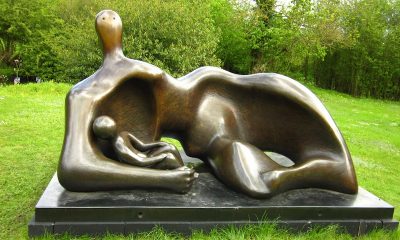
Henry Moore’s monumental sculptures, scattered across 70 acres of rolling countryside at Perry Green, are one of Hertfordshire’s cultural highlights. Hoglands, the house where sculptor Henry Moore lived for nearly 50 years, and the studios he worked in, are open to the public. The Henry Moore Foundation have added a visitors’ centre and cafe.
- Henry Moore’s studios and gardens are open seasonally.
- A twenty five-minute walk from the nearest bus stop takes you on public paths around some of the most scenic parts of the estate and definitely adds to the pleasure of visiting. And the bus ride itself is a delight, running alongside the New River, through some lovely villages and winding wooded lanes. You could also catch the bus from St Margarets station.
- Turn left out of Ware railway station, left again over the railway, and right without crossing the road ahead to find the bus stop opposite the college. Bus 35 leaves this stop a few times per day.
- Get off the bus after twenty minutes at the stop called Bourne Lane, cross over and walk along Bourne Lane (ignoring Woodland Road). After about 150m, fork left through a gate onto a track that says private property (don’t worry – it’s a public path).
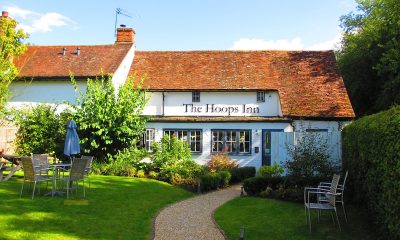
- Keep straight on a surfaced path through trees, fork right up to a kissing gate and follow the posts with arrows across a huge rolling sheep field towards Moore’s Large Reclining Figure on a hill on the horizon. Follow the map below to emerge in Perry Green near the (closed) Hoops Inn. The entrance is nearby and there are lots more sculptures (and often exhibitions, too) to see inside the grounds.
- To get to the Henry Moore studios and garden without any walking, catch a train to Bishop’s Stortford station instead (trains from Liverpool Street or Tottenham Hale in London towards Cambridge or Stansted Airport) and take a taxi from outside the station.
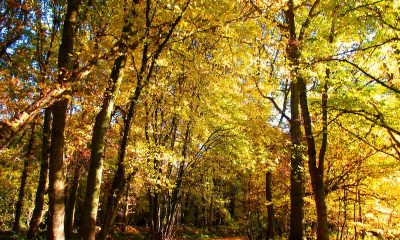
- Buses back to Hertford and Ware from Bourne Lane, where you arrived, currently run a few times per day. Or you could choose the lovely two-mile stroll to Much Hadham (see 5 below), following signs for the Hertfordshire Way (OS Explorer map 194 will be very handy). It’s especially beautiful in spring, when the woods are full of bluebells, or autumn, when the beech trees all turn gold.
5. Much Hadham
Hertford is a great hub for bus journeys into the surrounding countryside. You can catch the 724 from stop 5 at the bus station: east towards Harlow or west towards Hatfield and beyond. Bus 35, which passes close to the Henry Moore foundation at Perry Green (see 4 above), takes a 1½ hour scenic tour through the rolling Hertfordshire fields on its trip to Bishop’s Stortford. On the way it passes through lovely villages like Widford and Much Hadham.
- Much Hadham also has Henry Moore connections. He carved stone heads for the door of St Andrew’s church and the west window there is based on his tree designs.
- Don’t miss the Forge Museum. Housed in a medieval building, with a small café and changing exhibitions, it has a working forge, a collection of local finds, and amazing Elizabethan murals. Revealed in the 1990s, under layers of paint and wallpaper, these rare domestic wall paintings include a lively Judgement of Solomon, complete with curved sword, dangling baby, and figures in classic Elizabethan outfits.
- With distractions like this, Much Hadham is a great place to wait for a bus and the local pub, the Bull Inn does fabulous food, too.
- Check when the last bus leaves, and for the bus stops throughout the long village, with its half-timbered houses and Georgian mansions.
6. Have a walk around town
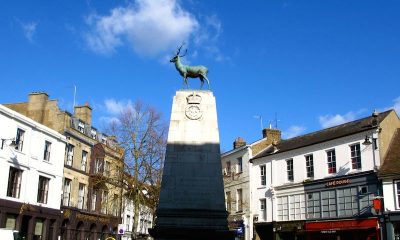
Don’t overlook the centre of Hertford itself. Hertfordshire’s county town has centuries of varied history. The tourist office has town guides that can lead you to the castle and its riverside grounds, the stag-topped war memorial, and the town museum.
- The museum, in the middle of town, is five minutes’ walk from Hertford East and three minutes from the bus station. As well as some great collections of local pots and stuffed birds, the museum has Britain’s biggest collection of toothbrushes – relics of the old Addis factory nearby. It’s open 10am to 5pm, Tuesday to Sunday, and is housed in a 17th-century building with a Jacobean-style knot garden.
- Two doors down from the museum, look out for the Hertford Coffee Lab, serving irresistible cakes, hot chocolate and – yes – great coffee.
- Follow the Hertford Historic Walk to discover the Georgian Shire Hall, the 15th-century, orange-painted Verger’s House on St Andrew Street, with its half-timbering and carved figures, and the world’s oldest purpose-built Friends’ Meeting House in Railway Street.
- Ware has its own museum and treasures too, including the open-air Priory Lido in summer.
- There’s a trail round local sites relating to the famous Great Bed of Ware, on show in the Victoria and Albert museum; or you can follow the sculpture trail constructed by a local primary school.
- And don’t forget the pub crawl possibilities of all those riverside pubs, like Waterside Inn, just over the bridge from Ware station, with a garden overlooking the river.
Buses, bikes and places to stay
Here’s a bit more practical info if you’re planning a staycation in the area.
- If you’re taking several bus rides, it’s worth investing in the Intalink Connect ticket, giving unlimited trips across wider areas. It’s particularly good value for a group of four.
- If the bus journeys are local and on the same day that you arrive by train, the PlusBus ticket is a bargain for unlimited bus rides around the whole urban area.
- The Hertford Cycle Hub hopes to provide bike hire in the future and is a good supportive resource if you’ve brought your own bike with you and need help.
- There is a Premier Inn hotel very close to Ware railway station.