The world’s oldest inhabited castle and official residence of his maj, King Charles III, Windsor Castle has towered over the Thames for more than a thousand years. But that’s not all this old town has to offer: you can see the place where King John agreed to sign Magna Carta, the famous document enshrining some of the legal principles that still exist today. You can stroll through Windsor Great Park or along the lovely River Thames or visit Old Windsor, earliest Saxon town in Berkshire and seat of Edward the Confessor. Do all this and more with a PlusBus ticket, which gives you all-day bus travel across Windsor and neighbouring Eton.
Adventures around Windsor
with PlusBus


1. Windsor Castle
Dominating the skyline for miles around, the enormous castle is an obvious place to start getting to know the town. Windsor Castle is a very popular tourist attraction as well as an official royal residence, packed with gothic architecture, grand state rooms, fine art, porcelain and layers of history. Thanks to Windsor Castle and Peter Packer for the photo above.
- Among many other iconic artefacts, Windsor Castle is home to Queen Mary’s Dolls’ House, largest dolls’ house in the world, which is celebrating its 100th birthday in 2024.
- How do I get to Windsor Castle car-free? Follow Good Journey’s directions. The castle is a short stroll from either or Windsor’s railway stations. When you book your train ticket to either Windsor and Eton Riverside or Windsor and Eton Central, don’t forget to add PlusBus for unlimited bus travel in the Windsor area.
- As the biggest occupied castle in the world, Windsor has leg-aching numbers of gold-decked rooms and three different gardens. Luckily, the Undercroft Café, in one of the castle’s oldest rooms, is ready to serve you a pick-me-up cake and coffee to a salad, soup and sandwich lunch before you head off to explore more of Windsor.
- You might decide to save the castle for another day and simply stroll up Windsor’s picturesque Thames Street, next to the castle walls, and hop straight on the bus. The road is lined with bars and cafes and you’ll pass the 30-metre-high Curfew Tower, the belfry of the College of St George, on the castle’s northwest corner.
- Walking on up the High Street, past the statue of Queen Victoria to Windsor Guildhall (housing Tourist information), you’ll reach the Parish Church. Bus stop J, outside the church, is a great place to catch bus 8 to Old Windsor, which will take you past some interesting sights to Runnymede, where the Magna Carta was signed in the thirteenth century. See 2 below.
2. Runnymede
In June 1215, King John met a group of rebel barons in a marshy field at Runnymede and agreed to sign the Magna Carta. The Magna Carta (or Great Charter in English) first recorded principles that still operate today, including trial by jury and the idea that the monarch was not above the law. The location of this famous agreement, in the boggy water meadows at Runnymede, was chosen as a neutral meeting place between the king’s fortress at Windsor and the rebel base at Staines. The area now has some impressive monuments to visit along a network of lovely paths to explore through shady woods and meadows bright with buttercups.
- How do I get to Runnymede by bus? Hop on bus 8 outside Windsor’s Theatre Royal or Parish Church and get off, after about 12 minutes, opposite the Bells of Ouzeley pub in Old Windsor. From here, cross the road and turn right along the pavement with the River Thames on your left. Beyond the mini roundabout, keep left along a tarmac path near the river into Runnymede.
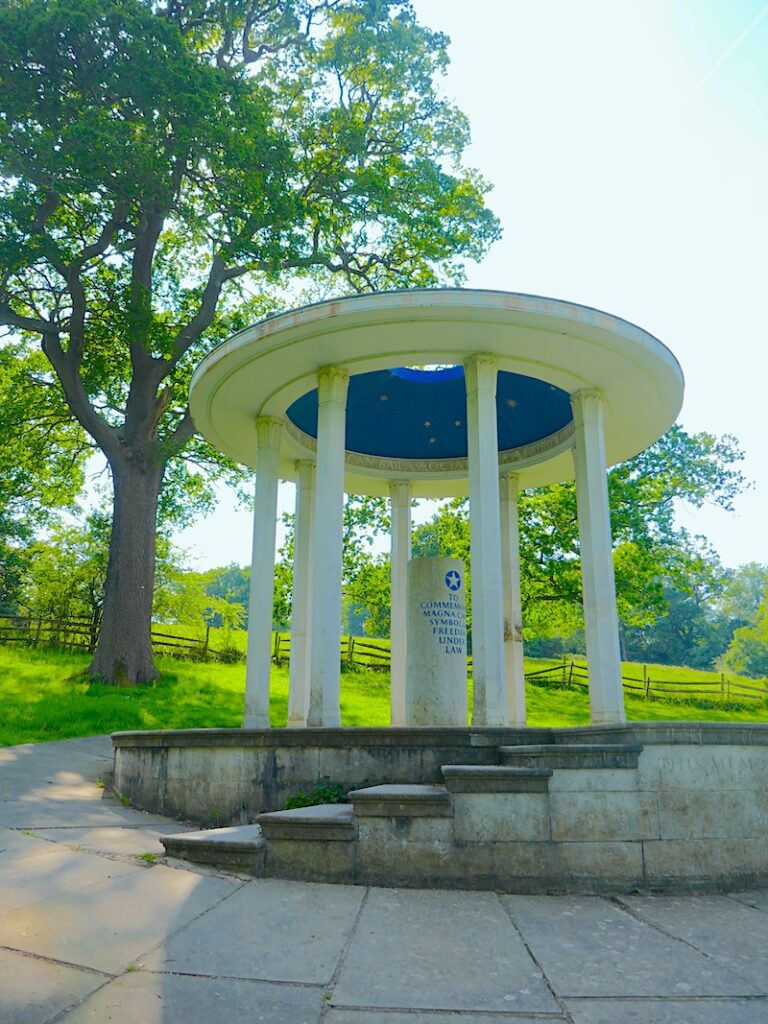
- Reaching the brick Magna Carta tearoom, fork right across the meadow, past large wicker figures and a sculpture called The Jurors, consisting of twelve ornate chairs, to reach the Magna Carta memorial surrounded by neoclassical columns.
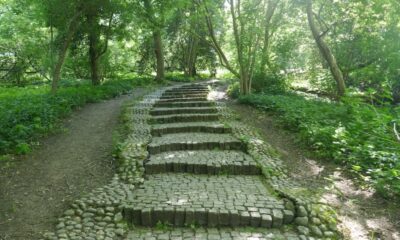
- Nearby, are a circular installation called Writ in Water and a flight of cobbled steps leading up to a monument to John F Kennedy, a seven-ton block of Portland stone carved with words from Kennedy’s 1961 inaugural address.
- Look out on the bus back for the Thames Path, Windsor Great Park and other interesting landmarks. In the green space between Windsor and Old Windsor, the bus crosses the Long Walk, a grand avenue first created by Charles II. It stretches from Windsor Castle to a statue of George III on horseback and beyond. This is a great place for a walk through the trees to the deer park. See 3 below.

3. Take a stroll in the park – or by the river…
Central Windsor around the famous castle gets very crowded with tourists, but the bus enables you to escape to the large expanses of grass and water that surround the town.
- The Great Park, mentioned above, can be reached via the Long Walk (see 2 above). You could get off bus 8 at Shaw Farm Gate and walk back along the road and then along the stately avenue, past the equestrian statue of George III. Bus 01, from York House in Windsor, runs to the stop called Queen’s Anne Gate.
- The delightful Thames Path runs beside the river for several lovely miles through the Windsor area and the bus is perfect for a linear walk. You can set off from near the station and walk for five miles, following the signs across the river and back to Old Windsor (see 2 above). Wildlife along the Thames includes ducks, coots, moorhens and several types of geese, including smart-looking Egyptian geese with their distinctive dark eyepatches.
- Where the road converges with the River Thames at the far end of Old Windsor, you will reach a bus stop opposite the Harvester pub. From here, bus 8 will take you back to the station.
- For more car-free day trips in the area, check out our guide to exploring Slough by bus. You can also buy a Plusbus ticket for Slough and open up a whole new set of adventures.