With spectacular walks and reliable public transport, it’s easy to explore the Isle of Wight on foot and by (sometimes open-topped) bus. This feature focusses on the western half of the island with great museums, literary connections and lots of wildlife.
Isle of Wight – west
Hampshire


1. Arrive by train and boat. Continue by bike or bus.
Getting on a boat is always a good way to start a holiday. The Wightlink ferry ride from Lymington Pier to Yarmouth is beautiful with flocks of water birds on the marshes and views of Hurst Castle and the island ahead.
- In fact, the whole train journey through the New Forest to get to Lymington Pier is also enjoyable with deer and grazing ponies among miles of tussocky heather and birch trees. Buy a through ticket to Yarmouth and the ferry is included in the price. Buses leave from right next to the ferry port, heading all over the island.
- Yarmouth itself is also well worth exploring with a Tudor castle, bike hire, great cafes and seafront views.
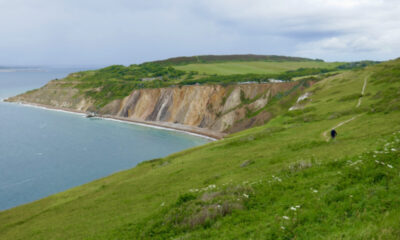
- Regular buses leaving Yarmouth include bus 7 to Freshwater and Newport and, in summer, the open-topped Needles Breezer, which climbs over the downs for views across the colourful cliffs of Alum Bay and the old forts around the island’s western tip.
2. Freshwater
The village of Freshwater, with its handsome pebble beach, grassy downs and white cliffs, has attracted poets, artists and musicians over the years. There’s a surprising amount to see and do here and a choice of cafés when you need refreshments. The poet Alfred Lord Tennyson lived here for forty years and regularly tramped over the chalky hills, declaring: “The air is worth sixpence a pint.”
- There’s a 14-mile Tennyson Trail running along the spine of West Wight. It crosses tumuli-studded Compton Down with its blue butterflies and chalk grassland flowers, including wild thyme, nodding musk thistles and numerous orchids.
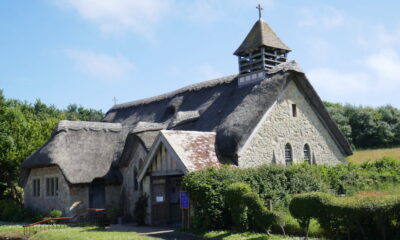
- Farringford, Tennyson’s creeper-covered house, is just round the corner and you can visit the colourful walled garden and wooded parkland (there are garden-only tickets or book ahead for house tours). A lovely green footpath, from near Freshwater’s thatched church and almost opposite the Piano café, leads to the entrance. It runs under a footbridge that was first built by Tennyson to escape his fans.
- Dimbola, once home to pioneering Victorian photographer Julia Margaret Cameron, is now a gallery displaying pictures by Cameron and other photographers, with one room dedicated to memorabilia from the Isle of Wight festivals.
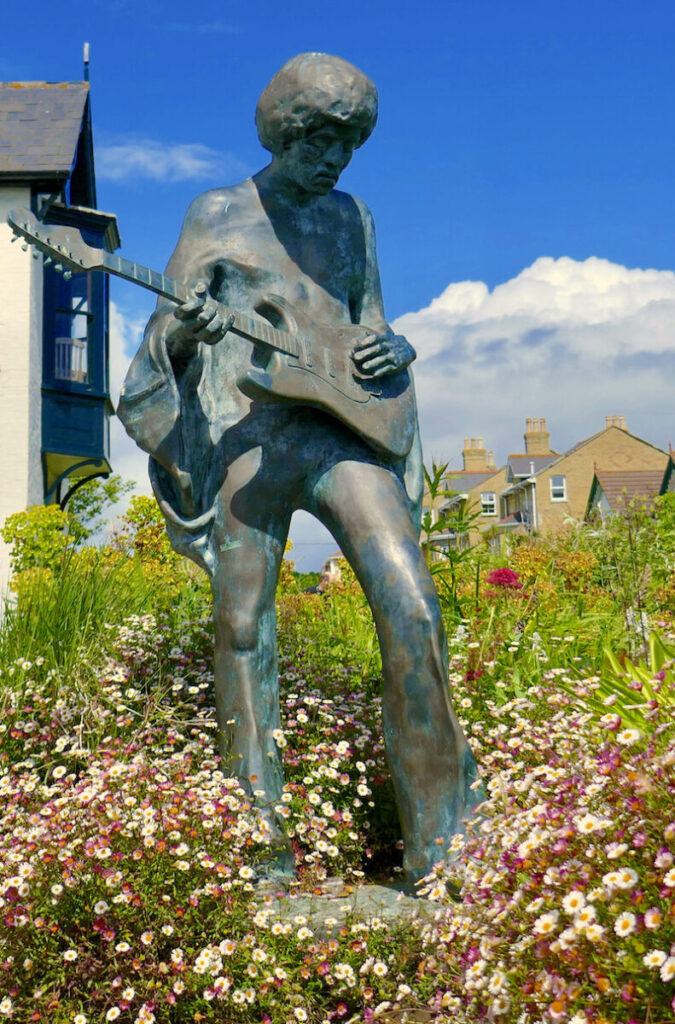
- The 1970 festival, with an audience of 600,000, is still the biggest concert ever held in UK. Guitarist and singer-songwriter Jimi Hendrix played one of his final gigs there on August 31; only nineteen days later he was dead. A bronze statue of Hendrix stands in the garden by the Dimbola tea room.

3. Mottistone Gardens
The grounds around an old stone manor house and derelict farmyard have been transformed into a flowering garden with subtropical plants, scented roses and banks of foxgloves.
- Bus 12 from Freshwater to Newport stops near the gate of Mottistone Manor every couple of hours. It runs through pretty thatched villages on the way.
- Borders at the manor are bursting with orange lilies, red bottlebrush flowers, and deep blue delphiniums
- The mysterious Longstone is just half a mile’s hike up onto the downs and the sea is a mile away in the other direction.
4. Carisbrooke Castle
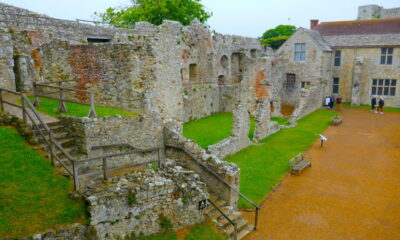
Nearly a thousand varied years of history are crammed into the sprawling grounds of Carisbrooke Castle. The ancient keep dates back to 1100, when the whole of the Isle of Wight belonged to the de Redvers family. More than five hundred years later, Charles I was imprisoned here under Cromwell. Now, there’s a new formal garden, with an avenue of fig trees, and donkeys still patiently demonstrate a wheel in the old well house that raises a bucket at timed intervals during certain days.
- Bus 12 runs on from Mottistone Manor (or direct from Freshwater or Newport) to the village of Carisbrooke, once the island’s capital.
- It stops near medieval St Mary’s Church and from there it’s a short walk down pretty Castle Street to visit Carisbrooke Castle. A path leads steeply up through a field of sheep to emerge near the gatehouse, where spiral stairways lead up onto the ancient walls.
5. Shalfleet and Newtown
Newtown was also once the capital of the island. Now, it’s a little village in the saltmarsh with paths through flowering hay meadows, a waterside causeway by the estuary, a wooden walkway through marshes and a well-equipped bird hide.
- Bus 7 from Yarmouth takes just ten minutes to reach Shalfleet. From here, follow the Coastal Path along idyllic lanes and paths and then a much less satisfactory roadside stretch to Newtown estuary.
- There’s a visitor centre opposite the old brick town hall, which is subsiding gently into the clover-covered verges.
Buses, bikes and places to stay
Here’s some other practical info if you’re planning a staycation in West Wight.
- If you’re taking several bus rides around the island, Southern Vectis has multi-day tickets offering unlimited travel and you can track the buses in real time on the Southern Vectis app.
- You can hire bikes from Wight Cycle Hire. They have a base next to the Off the Rails café in Yarmouth, but will also deliver.
- There are lots of places to stay in West Wight, like Yarmouth’s Bugle Coaching Inn or YHA Totland. The youth hostel is just five minutes’ stroll from the Christ Church bus stop on the bus 7 and Needles Breezer routes. Newport, in the middle of the island, has the biggest supply of affordable B&Bs and a Travelodge.
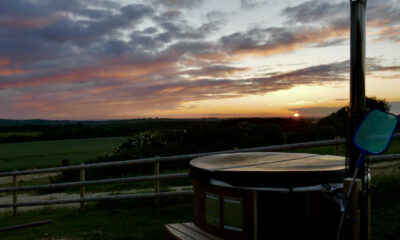
- And, thanks to the great summer buses, it’s also possible to stay somewhere really rural. Tapnell Farm, two miles over the downs from Freshwater, has safari tents, wooden pods, modulogs, with sunset-facing hot tubs, and new geodesic domes with views north across the Solent. The Summer Links bus stops at the entrance to Tapnell, from Easter to October, and there are trails (PDF) from the door.